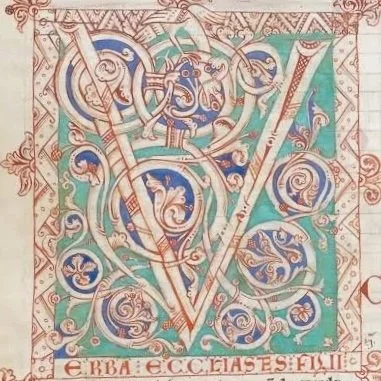
Vatican · though technically a territory of Rome, is also the colloquial term for the jurisdiction of the Roman Pontiff (the Pope).
Veneration · is not adoration. It means to honour or respect, like we do for memories and legacies of heroes (living or their statue).
Vessels (Sacred) · are the containers set apart for sacred use in the Mass. They include:
Chalice: the cup or goblet used for the wine-come-precious-blood. It must be made of or lined with gold and cannot be of a porous material. As the wine is fortified, a metal chalice is self-cleaning/sanitising.
Paten: a small, typically flat dish for Holy Communion. This should be lined with gold on at least the surfaces that come in contact with the Eucharistic.
Ciborium (plural ciboria): a lidded dish made of or lined with precious metals, used for holding large numbers of hosts. Often, the footing or stem of a ciborium is tall (like a chalice) for convenience in holding during distribution of Holy Communion. The Blessed Sacrament is often reserved in the tabernacle within a ciborium.
Monstrance: An ornate display for adoration of the Blessed Sacrament and Eucharistic processions. Typically, the design features circles or lines (like rays of light emitting from) around the receptacle for the host. Often precious stones and/or imagery of our Lord feature on them.
Lunette (/luna/lunula): a device, made of gold, to hold the host upright in the monstrance, usually in the tabernacle.
And, though not strictly sacred, liturgical:
Cruets: The small bottle for the water and wine that is mixed in the chalice. Sometimes a more conventional carafe is used for the wine (especially in larger quantities).
The finger bowl - often known as the lavabo bowl, from the Latin prayer Lava me, Domine… (wash me, o Lord…) used by the priest when washing his hands.
Other items that are not vessels but closely associated include altar linen and furnishings:
Altar Candles: Usually (but not necessarily) made of beeswax. They may be placed on or adjacent the altar. At least one is required, though two recommended for usual days; then four for feasts and six for solemnities. An extra candle is sometimes placed in the middle of the altar when the bishop presides.
Altar cross: There must be a cross with the figure of Christ crucified on or near the altar. If the processional cross is near the altar, for instance, it is sufficient.
Vestments · are literally any clothes. In the Catholic world, the term usually refers to those garments used in liturgy. The main vestments are:
Alb: A white gown or tunic that is worn first at baptism, looking forward to the great multitudes so clothed in heaven (c.f. Revelation).
Stole: A thin band of (often ornate) cloth, symbolising the authority of the Church worn over the shoulders; for deacons, it is worn over one shoulder, for priests, like a yolk (traditionally crossed over the chest at Mass) and simply similarly for bishops (but hanging straight). Always under all other vestments.
Dalmatic: An outer tunic, with lines forming a cross; deacons wear one, symbolising their service (as servants in Roman times). Bishops also wear one (usually less ornate) under the chasuble on solemn occasions.
Chasuble: An outer cape (like a poncho) like the love of Christ which covers all things.
Maniple: Though technically no longer on the list of vestments for Mass, it has a long history in the Church. From its original function as a kind of handkerchief, it is a sign of service.
Vincent de Paul (Society) · carry out work for the poor – as their tagline reads: “Good works.” Founded by Blessed Frédéric Ozanam in 1833 it is named after the 16th-century saint known for his organised charitable works. While the society is technically independent from the Church, they are aligned in vision and mission.
Vocation · is a calling from God (from the Latin vocare – ‘to call’). This calling is inseparable from our nature and good desires. They can be understood broadly in three levels.
First, the universal call to holiness. This is what we do with our aloneness. Each person is called to live a life to the full (c.f. John 10:10). And human life consists in beholding God (c.f. St Irenaeus).
The second, is what is often thought of when people discuss vocations. This is the call to a state in life (e.g. marriage, presbyterate, religious life); the calling of what one does with one’s love.
Finally, there is a calling to a profession or an occupation. This includes all kinds of things from wage-paying jobs to endeavours. This is what one does day-to-day, also known as an apostolate.
Some say that motherhood is a vocation. It is in the third sense, stemming from the second. When people speak of teaching or nursing as a vocation, it is the third sense again; it is a calling to some noble and honourable apostolate. But not successive calling should compromise a more foundational one; that is to say a job should not compromise a way of life/love and one’s love should not get in the way of life or holiness.
Voting · has featured since the beginning of the Church (e.g. Acts 15). However, this is not a matter of conventional democracy. In Church matters, the expectation is for a 2/3+1 majority. This is not a simple majority (1/2+1).
Vows · are promises made solemnly to God. Usually, religious vow (promises of freedom in) poverty, chastity, and obedience. In the Catholic tradition, Marriage is contracted by the mutual exchange of vows. Secular (diocesan) priests do not take vow per se but are expected to live guided by the evangelical counsels.